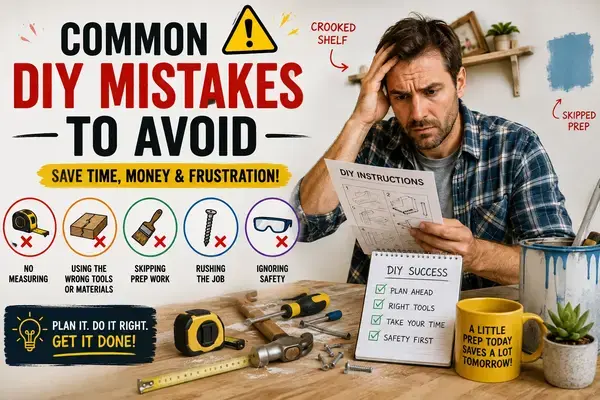
Common DIY Mistakes to Avoid: Your Complete Fix Guide
You grabbed your toolbox expecting a quick weekend win. Instead, cracked tiles, peeling paint, and a repair bill twice the cost of hiring a professional now sit in front of you. Understanding the common DIY mistakes to avoid before you start any home project saves your money, your time, and your home’s value.
This guide walks you through every major pitfall homeowners face. You will find clear fixes, real examples, and practical steps that keep your next project on track from start to finish.
What Are the Most Common DIY Mistakes to Avoid in Home Renovation?
Home renovation projects excite homeowners who want to save money and add personal touches to their living spaces. Yet the most common DIY mistakes to avoid often happen before you even pick up a hammer.
Skipping a written plan, ignoring building permits, and underestimating project timelines top the list. These errors compound quickly and turn a simple bathroom update into a months-long headache.
Start every project with a detailed scope of work. Write down your budget, your timeline, and the specific materials you need before you visit the hardware store.
Why Do Beginners Skip Proper Planning and Measurements?
Measuring once and cutting immediately causes more wasted material than almost any other error. Beginners often eyeball dimensions instead of using a tape measure and a level.
This mistake shows up in flooring installs, shelf mounting, and cabinet fitting. A quarter-inch gap might seem small on paper, but it creates visible misalignment across an entire wall.
Measure every surface twice. Write each number down on paper. Then measure a third time before you make your first cut.
How Does Choosing the Wrong Materials Ruin Your Project?
Picking materials based on price alone leads to premature wear, water damage, and structural weakness. Cheap paint chips within months. Thin drywall cracks under normal household vibration.
The common DIY mistakes to avoid here include buying indoor-rated products for outdoor use and ignoring moisture ratings for bathroom and kitchen materials. Always read the manufacturer label for application guidelines.
Match your material to the environment. Use cement board instead of drywall behind shower tiles. Choose exterior-grade caulk for window frames exposed to rain and sun.
What Safety Risks Do Homeowners Ignore During DIY Work?
The U.S. Consumer Product Safety Commission reports that home repair injuries send hundreds of thousands of people to emergency rooms each year (CPSC.gov). Most of these injuries stem from missing safety gear and improper ladder use.
Failing to wear safety goggles, dust masks, and cut-resistant gloves puts your eyes, lungs, and hands at serious risk. Working on electrical panels without shutting off the main breaker can cause fatal shocks.
Treat every project as if a professional inspector will walk through your workspace. Wear proper PPE, secure your ladder on flat ground, and never bypass safety switches on power tools.
Why Is Rushing Through Drying and Curing Times a Costly Error?
Paint feels dry to the touch within an hour, but full curing takes up to 30 days. Applying a second coat too early traps moisture underneath and causes bubbling, peeling, and uneven color.
This same impatience ruins concrete patches, tile grout, and wood stain finishes. The common DIY mistakes to avoid around curing times cost homeowners thousands in rework every year.
Read the product data sheet for every material you use. Set a timer on your phone. Resist the urge to touch, walk on, or load any surface before the manufacturer’s stated cure time passes.
How Does Poor Surface Preparation Lead to Project Failure?
Painting over dirty walls, tiling over uneven floors, and staining un-sanded wood all guarantee early failure. Surface preparation accounts for roughly 70% of a quality finish, yet most beginners spend less than 10% of their time on this step.
Grease, dust, old adhesive, and flaking paint prevent new materials from bonding correctly. The result is a project that looks great on day one and falls apart by week four.
Clean every surface with the right solvent. Sand glossy finishes to create a mechanical bond. Fill holes and cracks with appropriate filler, then sand smooth before applying your final product.
What Electrical and Plumbing Mistakes Put Your Home at Risk?
The National Fire Protection Association attributes roughly 46,000 home fires per year to electrical failures, many linked to unpermitted DIY wiring (NFPA.org). Overloading circuits, using the wrong wire gauge, and skipping junction box covers create hidden fire hazards inside your walls.
Plumbing errors carry equal danger. Overtightening PVC fittings cracks the pipe. Using Teflon tape on flare joints causes gas leaks. Mixing incompatible pipe materials accelerates corrosion.
Pull a permit for any electrical or plumbing work your local code requires. If you feel unsure about a connection, stop and call a licensed electrician or plumber. The service call costs far less than a house fire or a flooded basement.
Why Do Painters Ignore Primer and Proper Ventilation?
Primer seals porous surfaces, blocks stains, and creates a uniform base for your topcoat. Skipping it causes uneven sheen, visible patch marks, and color bleed-through from old wallpaper or water stains.
The U.S. Environmental Protection Agency warns that poor ventilation during painting exposes homeowners to volatile organic compounds that irritate the lungs and nervous system (EPA.gov). Opening windows and running exhaust fans is not optional.
Apply one coat of stain-blocking primer on every bare or repaired surface. Keep cross-ventilation active throughout the painting process and for at least 48 hours after your final coat dries.
How Can Overestimating Your Skill Level Waste Money?
Confidence is valuable, but misplaced confidence destroys budgets. Tackling a full kitchen remodel after successfully painting a bedroom creates a false sense of readiness for complex trades work.
The common DIY mistakes to avoid in this category include attempting structural wall removal, roof repairs, and HVAC modifications without professional training. These projects require engineering knowledge and code compliance that YouTube tutorials cannot replace.
Be honest about your current skill level. Start with small, low-risk projects and build competence over time. Save your money by doing what you can, and spend it wisely on licensed contractors for what you cannot.
What Tool Mistakes Cause the Most Damage in DIY Projects?
Using a flathead screwdriver as a chisel, running a circular saw with a dull blade, and hammering nails with a wrench all damage your materials and your tools. Wrong tool choices also increase injury risk significantly.
Cheap, no-name power tools often lack safety features like blade guards and electric brakes. Investing in quality tools from trusted brands like DeWalt, Makita, or Bosch pays for itself within the first few projects.
Buy or rent the correct tool for each specific task. Inspect blades, bits, and cords before every use. Store your tools in a dry location to prevent rust and electrical degradation.
When Should You Stop and Call a Professional Instead?
Knowing your limits separates a successful DIYer from a homeowner facing massive repair bills. Structural changes, asbestos removal, gas line work, and main sewer repairs belong in the hands of licensed professionals.
Building codes exist to protect your family and your property. Unpermitted work can void your homeowner’s insurance and create legal problems when you sell your house.
Call a professional when the project involves load-bearing walls, your home’s main electrical panel, or any system that requires a municipal inspection. Protecting your investment matters more than proving you can do it all yourself.
Common DIY Mistakes to Avoid: Quick-Reference Table
| DIY Mistake | Why It Fails | Correct Approach | Estimated Rework Cost |
| Skipping measurements | Misaligned cuts and gaps | Measure three times, write numbers down | $100–$500 |
| Using wrong materials | Premature wear and water damage | Match material to environment and moisture level | $200–$1,500 |
| Ignoring safety gear | Injuries and long-term health risks | Wear goggles, gloves, masks, and ear protection | Medical bills vary |
| Rushing cure times | Bubbling paint and weak bonds | Follow manufacturer drying and curing schedules | $150–$800 |
| Poor surface prep | Peeling, cracking, and adhesion failure | Clean, sand, fill, and prime every surface | $300–$1,200 |
| DIY electrical wiring | Fire hazards and code violations | Hire a licensed electrician for panel and circuit work | $500–$5,000 |
| Skipping primer | Uneven color and stain bleed | Apply stain-blocking primer on all bare surfaces | $100–$400 |
| Overestimating skill | Structural damage and failed inspections | Start small and hire pros for complex trades | $1,000–$10,000 |
| Wrong tool selection | Damaged materials and personal injury | Use the correct tool and inspect before each use | $50–$600 |
| Ignoring building permits | Fines and insurance complications | Check local codes and pull permits before starting | $200–$2,000+ |
Frequently Asked Questions About Common DIY Mistakes to Avoid
What is the number one DIY mistake homeowners make?
Skipping proper planning and measurements causes the most widespread project failures. Homeowners who rush into a project without a written scope, accurate dimensions, and a realistic budget almost always face costly rework.
Can DIY mistakes lower my home’s resale value?
Yes. Poorly executed tile work, uneven paint jobs, and unpermitted electrical changes reduce your home’s appraised value. Buyers and home inspectors flag these issues during the sale process and negotiate lower offers.
How can I tell whether a project is too complex for me?
If the project involves structural changes, gas lines, main electrical panels, or requires a building permit you do not understand, hire a licensed professional. Your safety and your home’s integrity outweigh the satisfaction of doing it yourself.
What DIY mistakes cause the most expensive repairs?
Electrical wiring errors, plumbing leaks behind walls, and improper load-bearing wall removal create the highest repair bills. These mistakes often remain hidden for months before causing visible damage.
Are there DIY mistakes that violate building codes?
Yes. Unpermitted electrical work, improper stair railings, missing GFCI outlets near water sources, and incorrect venting for gas appliances all violate local and national building codes. Violations can result in fines and forced removal of your work.
How can I fix a DIY mistake before it gets worse?
Stop working immediately when you notice a problem. Assess the damage honestly, document it with photos, and consult a professional if the issue involves structural, electrical, or plumbing systems. Early intervention prevents small errors from becoming major disasters.
Take Control of Your Next Home Project
Every homeowner deserves the pride that comes from a well-executed DIY project. The common DIY mistakes to avoid outlined in this guide give you a clear roadmap to success. Plan carefully, measure precisely, choose the right materials, and respect your skill boundaries.